#1
Night Luck
8.2Editorial score
Casino welcome bonus 805% up to €6,400 + 280 FS
- MuchBetter · VISA · Apple Pay
- Crypto welcome 140% up to 1,600 USDT
- VIP pack 800% up to €14,500
Terms change often. Verify on the operator's own page.
Offers modelled before you claim
18+. Betting carries risk. Never stake more than you can afford to lose.
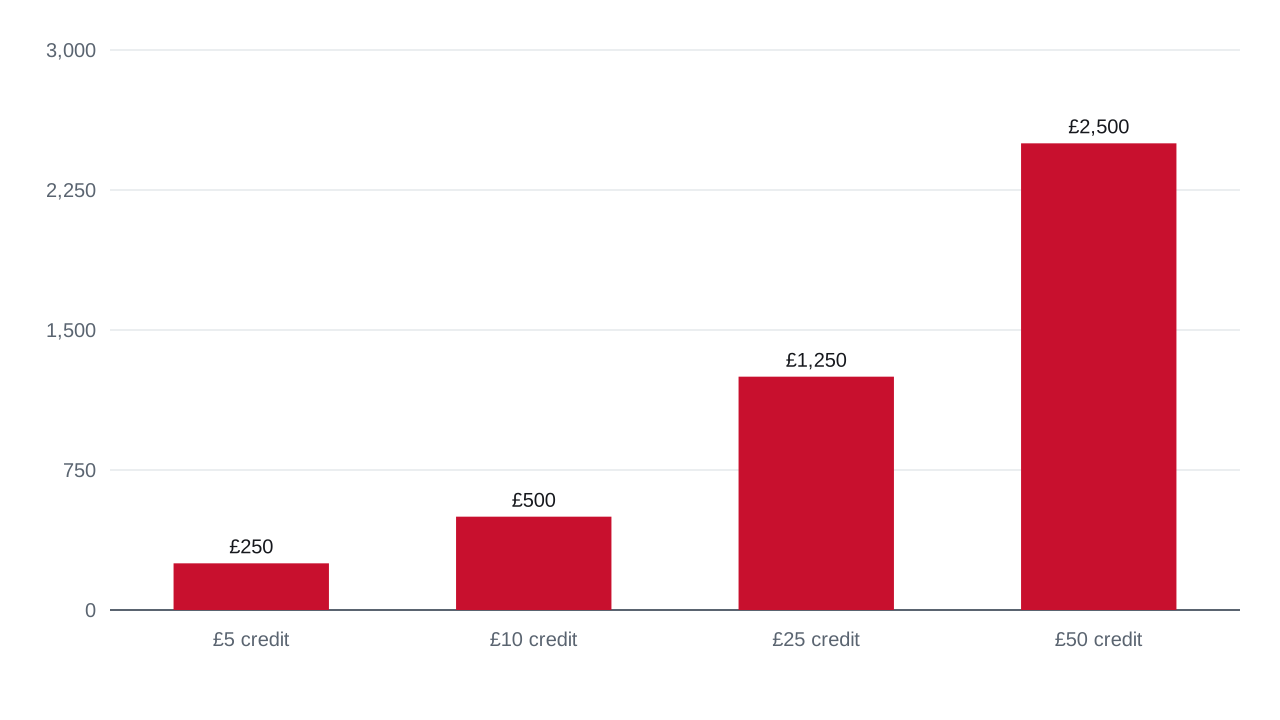
A casino grant without a deposit still carries a price in stakes, £10 of credit at 50 times is £500, and the ceiling on what it can become is usually two figures.
The board is editorial and its placement is bought, which the disclosure page explains. Terms move without notice, so verify each line on the operator's own page.
Casino welcome bonus 805% up to €6,400 + 280 FS
Terms change often. Verify on the operator's own page.
Welcome bonus €/£5,000 + 500 FS
Terms change often. Verify on the operator's own page.
Welcome pack €5,000 + 500 FS + €650 free bet
Terms change often. Verify on the operator's own page.
Welcome package 300% up to €/£1,000 + 150 FS
Terms change often. Verify on the operator's own page.
On this page
Search the phrase no deposit bonus casino and the results read like a contradiction: casino credit that arrives before any of your money does. The pull is obvious, and it is not a trick of wording. Credit or spins really are granted for the price of an account, the debit card stays in the wallet, and the play they buy is the same play that deposited customers get. As a description of the entrance, the phrase holds up well.
As a description of the exit, it holds nothing. The grant is not cash, and it never becomes cash on its own. It is bonus credit or a spin bundle, wrapped in terms that decide what it can turn into: a wagering multiplier, a ceiling on converted winnings, a clock that closes the offer, a weighting table that decides which games advance the counter, and a maximum stake rule that polices the process. Every device in that list appears in the terms of this class, and each gets its own reading below. The entrance is free; the exit is negotiated line by line in the terms.
Take the four working constraints one at a time. The multiplier demands stakes equal to a multiple of the credit, and in this part of the market the multiple usually lands between 20 and 50 times, with grants of this sort priced toward the strict end of that band. The ceiling clips whatever the wagering leaves behind, and the clip usually stops short of three figures. The clock allows days rather than weeks, and the weighting table gives slots full credit while table games count for little or nothing, which quietly stretches the clock for anyone who wanders.
The strictness has a design behind it. A grant that needs no deposit costs the operator money the moment it lands, so the terms exist to price that cost back: the multiplier makes conversion expensive, the ceiling bounds the loss when conversion succeeds anyway, and the clock caps how long the exposure stays open. The pricing is not a scandal; it is arithmetic, and arithmetic can be read in advance. Read clearly, the offer is an acquisition cost dressed as a gift, and there is nothing wrong with accepting a gift once its shape is understood.
The phrase also works as a label for a shelf of variants: registration credit, spins on signup, free chips, trial balances. The search term gathers them into one category, and the category shares a single skeleton, which is the skeleton this page takes apart. Whatever the packaging, the same four constraints do the governing, and the same handful of numbers decides the outcome.
None of this makes the terms dishonest. They are published, they are readable, and an operator that offered limitless conversion would not survive its first month. The problem is the gap between the headline and the arithmetic: the headline talks about the deposit, the arithmetic talks about the stakes, and a reader who takes only the headline walks into the arithmetic unprepared. The sections that follow exist to close that gap before any form is filled.
The route runs like this. The next section turns £10 of credit into the stakes it demands and the erosion it suffers along the way. A ladder section then scales the model across the credit sizes the category normally prints, and spins get a section of their own because they are the same offer in smaller pieces. After that come the price paid in registration data, the collision between small converted balances and withdrawal floors, what a British licence adds, how to read the comparison ranges, and a five-line routine to run before registering anywhere.
Assumptions first, in the open where they belong. The model works a £10 grant of bonus credit, a 50 times multiplier, a £100 ceiling and a 7 day clock. The multiplier sits at the top of the usual 20 to 50 times band because grants that need no deposit are normally set at the strict end of it, and the ceiling is a working figure for a cap of this class.
Weighting is assumed to favour slots: full credit on slot stakes, a fraction or nothing on table games. Every number below follows from those few lines, and the method survives any change of inputs: substitute the figures on the terms page in front of you and the arithmetic holds.
The central sum is short enough to check by hand. £10 at 50 times is £500 of settled stakes, and only after those stakes have been placed does whatever remains of the balance convert into withdrawable money. In most terms the stakes are made from the bonus balance itself, which means the credit is spent buying its own conversion: each round takes its stake from the balance, returns an outcome, and the counter falls by the stake whether the round won or lost. Weighting aside, every pound of that demand has to be met in stakes on rounds the terms recognise.
Two ledgers run in parallel, and confusing them is the commonest reading error. The balance ledger moves with outcomes: wins raise it, losses lower it. The counter ledger moves only with stakes, so a £1 spin advances the wagering by £1 whether it returned £40 or nothing. A lucky hour can swell the balance while barely denting the job, and an unlucky hour can empty the balance while the counter still shows most of its demand.
One more mechanical point belongs here: the sequencing rule. Terms usually spend the bonus balance first and the cash balance second, so deposited money is not consumed by the wagering unless the terms say otherwise. A minority of terms do the reverse and run the wagering across the combined balance, which changes the picture entirely. The sequencing line is three words long in most terms documents, and it is worth finding before the first stake.
Erosion runs alongside both ledgers. Published return figures for online slots commonly sit around 94 to 96 per cent, set per game by the operator, so treat the range as an assumption rather than a measurement. At 96 per cent, £500 of turnover carries an expected erosion of about £20, and at 94 per cent the expectation is nearer £30. Set that against a grant of £10: the conversion process is expected to cost more than the grant contains before a single pound turns withdrawable, and the shortfall comes out of the very balance the wagering is meant to save.
When variance runs the other way and the balance does survive the turnover, the second gate waits. The ceiling takes the converted amount down to £100, or to whatever smaller figure the terms name, and nothing above the cap reaches the cash balance. The two figures in the standfirst are not decoration: they are where the cap usually sits for this class, and they are the number the process converges on when it succeeds.
Sensitivity is worth a minute, because the grant never changes and the multiplier decides everything. At 35 times, the same £10 asks for £350 of stakes and expects roughly £14 to £21 of erosion at the same return figures. At 20 times the demand falls to £200 and the expected erosion drops into single figures. Each step down the multiplier buys real slack, which is why the multiplier line is the first line to read in any terms document, ahead of the spin count and the headline value.
The calculator on this page arrives set to the shape of this section: no deposit, a 50 times multiplier and a £100 ceiling. Move any input and the demanded stakes recalculate at once, which beats paging through a terms document with a notepad. The worked example here and the tool share one method; only the inputs are yours to change.
Bonus credit £0.00.
Wagering before cash out £0.00 at 50 times.
Assumptions: spins return 90 percent of face value before wagering; session cost uses the stated house edge as expected loss of bankroll per session.
The Gambling Act 2005 points its offence provisions at operators and advertisers rather than at players, so playing on an overseas site that holds no British licence is not itself an offence for an individual in Britain. What you lose is protection, not legality. Before registering anywhere, look the operator up on the Gambling Commission public register, because a licence entry is what carries the protections described on this page.
It asks for £500 of settled stakes before the bonus balance converts into withdrawable money. At a published return of about 94 to 96 per cent, a typical slot range, the expected erosion across that turnover runs to roughly £20 to £30. Whatever survives the turnover is then clipped by the ceiling, which usually lands in the low hundreds at most. The multiplier, the erosion and the cap work as one mechanism.
A no deposit offer needs no card to start, so the first payment question arrives later, when you fund an account or request a withdrawal. Licensed British operators cannot accept credit cards for gambling, a ban running since April 2020. Debit cards, e-wallets and bank transfer are the usual rails, and payout windows differ by rail, from inside a day on e-wallets to several banking days on transfer.
Expiry windows on registration credit usually run from three days to two weeks, and free spins often carry a shorter clock than the credit itself. When the window closes, unfinished wagering and any remaining bonus balance are usually removed. Expired spins simply disappear. Because the clock starts at registration rather than first play, a week of inattention can end the offer before the first stake is placed.
It suits a reader who wants to look at a lobby without paying for the look, and who treats the credit as a sample rather than an income. It does not suit anyone hoping to bank a large sum, because the ceiling on converted winnings usually sits between £20 and £200. If you have excluded yourself through GAMSTOP, a licensed site will block the registration, and that block should be respected.
Licensed British operators run their own registration offers, usually small spin bundles or modest credit with wagering attached, and they publish them under Gambling Commission rules. The licence brings the public register, GAMSTOP self-exclusion, approved dispute resolution, the credit card ban and tested game fairness. An offshore offer trades all of that for a larger headline number. The smaller licensed number is the one with protections attached.
Nothing is owed. Gambling winnings are not treated as taxable income for individual gamblers in the UK, and that holds wherever the operator is licensed, so the licence gap does not change your tax position. The duty the Treasury collects sits on the operator side, through remote gaming duty on British-facing profits. Your concern is terms rather than tax: the multiplier, the ceiling, the clock and the floor decide what the offer is worth.
Registration asks for your name, date of birth, home address, email and phone number, and age checks follow because the legal age for casino play in Britain is 18. Marketing consent boxes usually sit near the end of the form and can be unticked. An operator with no British register entry sits outside the British licensing regime, which is worth weighing before you trade a full identity record for a two figure credit.
Offers of this kind hold no UK Gambling Commission licence. That is not a technicality: it is the difference between a market with a public register, a national self-exclusion scheme, approved dispute resolution, a ban on credit card gambling, affordability checks and independently tested games, and a market with none of those guarantees. A dispute at a licensed operator goes to an approved scheme; an offshore dispute goes to the operator itself. Nothing on this page is an exception to that. If self-exclusion matters to you, GAMSTOP covers licensed operators only, and no tool on this page changes that.
Gambling can harm. For free, confidential support in the UK, call the National Gambling Helpline on 0808 8020 133 or contact BeGambleAware.
Keep reading
UK Gaming Club. Independent modelling of casino offers for British readers. No operator pays for a word on this page; board placement is bought and disclosed on the How We Are Paid page. 2026.