#1
Night Luck
8.2Editorial score
Casino welcome bonus 805% up to €6,400 + 280 FS
- MuchBetter · VISA · Apple Pay
- Crypto welcome 140% up to 1,600 USDT
- VIP pack 800% up to €14,500
Terms change often. Verify on the operator's own page.
Offers modelled before you claim
18+. Betting carries risk. Never stake more than you can afford to lose.
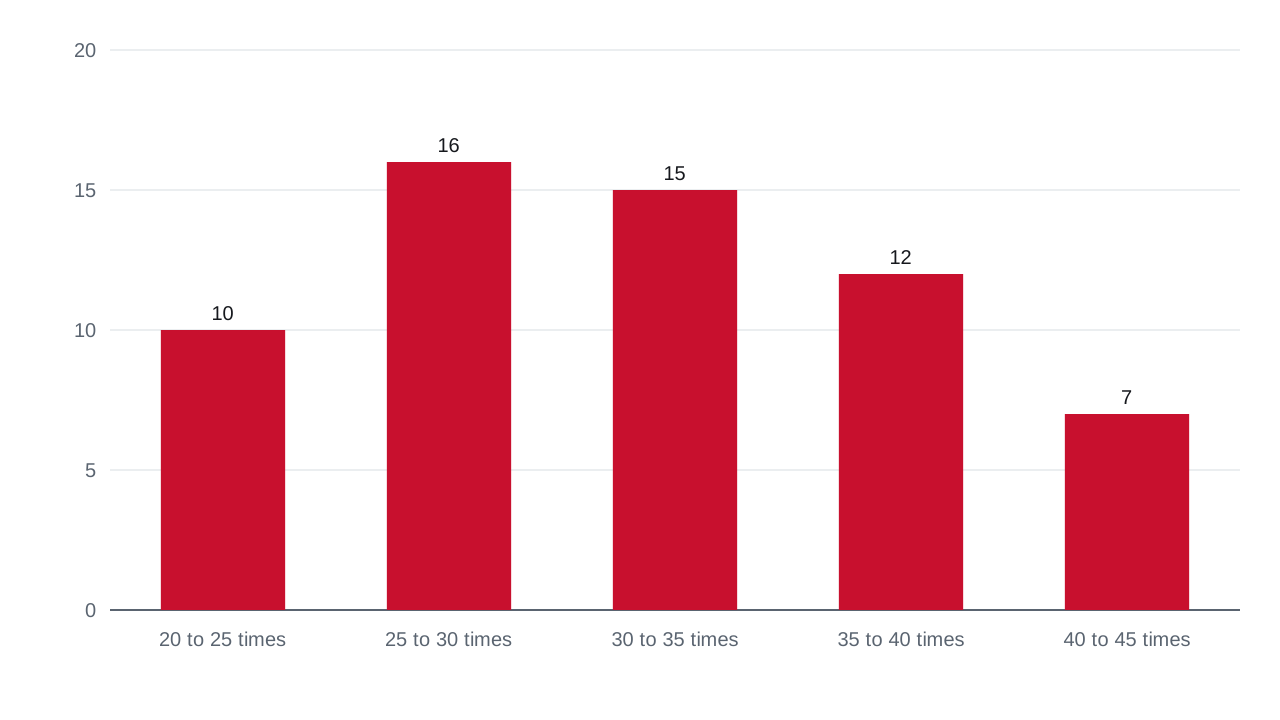
A 2026 launch typically buys attention with a 100 percent match plus spins at 30 to 40 times wagering, and the freshness that sells the banner says nothing about the cashier behind it.
The board is editorial and its placement is bought, which the disclosure page explains. Terms move without notice, so verify each line on the operator's own page.
Casino welcome bonus 805% up to €6,400 + 280 FS
Terms change often. Verify on the operator's own page.
Welcome bonus €/£5,000 + 500 FS
Terms change often. Verify on the operator's own page.
Welcome pack €5,000 + 500 FS + €650 free bet
Terms change often. Verify on the operator's own page.
Welcome package 300% up to €/£1,000 + 150 FS
Terms change often. Verify on the operator's own page.
On this page
New casino sites are sold on a date, and the date does more work than any line of terms. A launch hands a marketing team something to shout about: a fresh banner, a first deposit package priced to be noticed, a lobby dressed in this year’s colours. None of that describes the cashier you will actually deal with, the entity that holds the money, or the rules that decide whether a withdrawal gets paid. The word new is a campaign asset, and it ages out when the campaign says so, not when the operator has earned anything.
In 2026 the label covers at least three different situations. A brand can sit on a licence granted a few weeks earlier, with no operating history at all. A brand can be a redesign of an existing platform, a new name carried on a licence that has been active for years. A brand can be new to Britain while trading elsewhere for some time. Each case is genuinely new in one sense and not at all new in another, and the banner does not tell you which one you are looking at.
The register knows the difference even where the banner does not. The Gambling Commission licenses and regulates commercial gambling in Great Britain and publishes a public register where a company’s licence status can be looked up. The register records licence entities, not marketing labels. A site can call itself new for a year while the company behind it has held a licence since before the rebrand. The opposite also exists: a fresh name on no licence at all, serving Britain from outside the regime.
There is a recycling economy around the label too. A brand that stalls can be re-skinned, relaunched and introduced as new all over again, with a fresh welcome package and a fresh front page, while the platform underneath stays exactly as it was. From the reader’s side, nothing in the interface distinguishes a first launch from a second one. Only the register, and the age of the licence entity, give the game away, which is one reason this page keeps returning to it.
That is why the label is best read as a marketing state rather than a licensing state. It has no threshold: no age at which a site stops being new, no rule that closes a launch after six months. The freshness is the product being sold, and it is the one attribute that decays fastest, because next quarter another banner will be fresher still.
What does not decay is the small print. The match, the wagering multiplier, the cap on winnings, the expiry clock and the payment rails persist in the terms long after the launch campaign has moved on. Strip the date away and what remains is an offer of a familiar kind, and it can be judged the way any offer is judged: on what the terms require and on what the licence supplies.
This page therefore splits the subject in two. The offer side works the numbers: what a 100 percent match plus spins costs to clear, what wagering, caps and clocks do to the headline. The risk side works the operator: what a launch cashier usually looks like, what a register entry proves, and how to run a five-line check before any money moves. The two sides need different tools, and conflating them is how a loud banner becomes an expensive mistake.
Every operator in this market pays to acquire a depositor. An established brand spreads that cost across retention: reload offers, cashback days, a VIP ladder that keeps an existing base engaged. A launch has no base to retain. Its only real instrument is the welcome package, and the commercial logic pushes that package louder than anything the incumbents print, because the first deposit is the only transaction a young brand can influence directly.
The headline is the cheapest part to raise. A 100 percent match doubles the nominal value of whatever the reader deposits, and spins sweeten the number at a marginal cost measured in pennies, since face values on registration spins usually run between 5p and 20p. A banner promising a match plus 50 spins costs the operator a fraction of the figure it advertises. That gap between face value and true cost is where launch pricing lives.
Wagering is the mechanism that closes the gap. The multiplier dictates how much must be staked before the bonus or the spin winnings convert into withdrawable balance. At the working assumption of 35 times, each £1 of bonus money carries £35 of required stakes, and the operator’s margin on those stakes is how the headline pays for itself. Published slot RTP commonly sits around 94 to 96 percent, set per game by the operator, so the required stakes return slightly less than they cost to place over the long run; the reclaim is structural, not accidental.
Caps and clocks bound the liability from the other side. A cashout cap truncates the outlier case where variance runs hot: the model cap on this page is £100, against a typical range of £50 to £500 on offers of this class. The expiry clock forces completion within days: signup spins usually carry a 7 day window, matched packages 14 to 30 days. Anything unclaimed or uncleared when the clock stops is forfeited, and forfeiture is a budget line the finance team can predict.
Launch economics also explain why terms get revised so quickly in a brand’s first year. The opening package is a hypothesis about what the market will absorb: wagering set too light and the liability runs ahead of the deposits; set too heavy and the completion rate collapses, so the offer stops converting. Expect recalibration, occasionally mid-promotion, and expect the bonus terms page to be among the most edited pages on a young site.
None of this makes a launch offer a trick. It makes it a price. The operator is buying a customer and stating, in the small print, exactly how that purchase is financed, and the reader’s job is to read that financing with the same attention the banner received. A louder headline deserves a slower read, because the economics do not permit both ends of an offer to be generous: if the match is large, the multiplier, the cap or the clock is carrying the cost somewhere.
Set against that, the licensed incumbents price quietly for structural reasons: they already hold the customer, so their welcome offers compete on clarity rather than volume. That contrast is useful. When a launch headline runs twice the size of a licensed one, the difference is not generosity. It is the price of entering a market that did not ask for another banner, and it is always financed somewhere in the terms.
After the plain match, the most common launch shape is the spins bundle: a deposit or a registration triggers a fixed number of spins at a fixed face value, and whatever those spins win lands as bonus money subject to wagering. The calculator on this page runs the standard model with this prefill: 100 spins, a 10p face value, 35 times wagering on winnings and a £100 cashout cap. Every one of those four numbers is an assumption, and each is stated below, because a model is only as honest as its inputs.
Assumption one: the spin value. The model takes 10p a spin because face values on registration offers typically run from 5p to 20p. The headline count alone is unpriceable: 100 spins at 5p is £5 of play, while the same count at 20p is £20, a fourfold difference hiding behind one number. When a launch banner prints a spins figure without a face value, the missing number is the one that matters most.
Assumption two: the winnings. Spins do not credit their face value; they credit whatever the reels return. The model treats the face value as the winnings figure, so 100 spins at 10p produce £10 of modelled winnings. Published slot RTP commonly sits around 94 to 96 percent, with the figure set per game by the operator, so the long-run return on £10 of spins lands somewhere near £9.40 to £9.60. Variance means a single session can finish far from that range, so the face-value assumption is a modelling choice, not a prediction of what the reels will do.
Assumption three: the multiplier. The model applies 35 times, because wagering at this end of the market typically sits between 20 and 50 times and 35 is the midpoint used across this site’s calculators unless a page states otherwise. Applied to £10 of modelled winnings, the requirement is 35 times £10: £350 of stakes before the cashier releases anything to withdrawal.
What £350 means in practice depends on stake size. At £1 a spin it is 350 spins of wagering; at £2 a spin, 175. If the clock on the spins winnings runs 7 days, the usual expiry on signup spins, the stakes must average £50 a day before the balance is eligible. Most bonus terms also set a maximum stake while wagering is active, and the size varies, so a large-spin strategy can breach the clause and void the winnings; the clock, the stake limit and the multiplier interact, and the terms hold all three.
Assumption four: the cap. The model applies a £100 cashout cap, against a typical range of £50 to £500 on offers of this class. The cap truncates the upside: whatever the reels return, the withdrawal stops at £100, though in the modelled case it sits far above the £10 of expected winnings and binds only when variance runs hot. Its absence from a set of terms is itself a finding worth chasing, because a cashier that pays uncapped spin winnings is stating something unusual for this market.
Read together, the four inputs give the bundle its real shape: the face value prices the play, the multiplier prices the clearance, the cap sets the ceiling and the clock sets the deadline. Change any prefill in the calculator and the arithmetic holds. The model cannot say what the reels will do. It can say what the terms will require, and that is the part under your control.
Spins face value £10.00.
Estimated winnings before wagering £9.00 at a 90 percent return.
Wagering £3.15.
Cashable £9.00.
Assumptions: spins return 90 percent of face value before wagering; session cost uses the stated house edge as expected loss of bankroll per session.
The Gambling Act 2005 aims its offence provisions at operators and advertisers, not at players: there is no offence for an individual who plays on an unlicensed overseas site. What you lose is protection. An operator outside the British regime appears on no public register, takes no part in GAMSTOP, offers no approved dispute route and is not bound by the credit card ban. The legal question is settled; the protection gap is the real cost.
A 35 times requirement means you must stake 35 times the bonus, or the spin winnings, before the balance converts into withdrawable cash. On the modelled bundle of £10 in winnings, that is £350 of stakes. Multipliers in this class of offer typically run between 20 and 50 times, so 35 is the working midpoint this page assumes in its calculations. Read the multiplier against the amount it multiplies, because that product is the real price of the offer.
A typical launch cashier opens with debit cards, usually Visa and Mastercard, plus one or two e-wallets such as PayPal, Skrill or Neteller, and often Apple Pay. Pay by bank tends to arrive later. A licensed operator will not accept credit cards, which have been banned for British gambling since 14 April 2020. Where crypto funding appears, read it as a signal that the cashier answers to a regime other than the Commission's.
Expiry on launch offers runs short. Signup spins usually carry a 7 day clock, matched deposit packages 14 to 30 days, and no deposit credit can lapse in 3 to 7 days. The clock normally starts at activation or at first deposit, not when you get round to playing. Anything uncleared when it runs out is forfeited, so the deadline deserves a check alongside the wagering before you commit any money.
A launch offer suits a reader who has already decided to deposit a modest sum, wants the widest available match on it, and is willing to read the bonus terms line by line first. It suits nobody who values a proven cashier, a long complaint record or a fast first payout, because a new operator has none of those to offer. Newness is a trade: a louder headline set against an unproven record.
Licensed British operators run the same shapes at quieter figures: matches, spins bundles and cashback, with wagering in the 20 to 50 times region. What the licence adds is the package a launch cannot: a public register entry, GAMSTOP self-exclusion, approved dispute resolution through providers such as IBAS, the credit card ban and independently tested game fairness. The smaller licensed headline is the price of that package, and the gap in size is roughly what the missing protections cost.
Use the Gambling Commission's public register, which is free to search. Enter the trading name, confirm the licence shows as active, and check that the entity named on the register matches the company named in the site's terms, because brands and licence holders do not always coincide. A site serving British customers that cannot be found on the register is operating outside the British regime, whatever its homepage says.
No. Gambling winnings are not treated as taxable income for individual UK gamblers, and that holds regardless of where the operator is licensed, so the licence gap does not change your tax position. The duty side is the operator's affair: remote gaming duty is charged on the British-facing gaming profits of licensed remote operators. Whatever you withdraw arrives without an income tax charge attached, from either kind of site.
Offers of this kind hold no UK Gambling Commission licence. That is not a technicality: it is the difference between a market with a public register, a national self-exclusion scheme, approved dispute resolution, a ban on credit card gambling, affordability checks and independently tested games, and a market with none of those guarantees. A dispute at a licensed operator goes to an approved scheme; an offshore dispute goes to the operator itself. Nothing on this page is an exception to that. If self-exclusion matters to you, GAMSTOP covers licensed operators only, and no tool on this page changes that.
Gambling can harm. For free, confidential support in the UK, call the National Gambling Helpline on 0808 8020 133 or contact BeGambleAware.
Keep reading
UK Gaming Club. Independent modelling of casino offers for British readers. No operator pays for a word on this page; board placement is bought and disclosed on the How We Are Paid page. 2026.